

Water is the lifeblood of our homes, but when it escapes the confines of your plumbing system, it quickly becomes a silent source of destruction. A hidden water leak is not just a nuisance that raises your monthly utility bill; it is a serious threat to the structural integrity and indoor air quality of your property. For homeowners across Southeast Idaho, including those in Idaho Falls, Rigby, and Fort Hall, dealing with persistent moisture issues is a crucial element of home maintenance.
At Advanced Home Services, we understand the unique climate challenges of this region, especially the dangers posed by freezing temperatures. Identifying these clandestine leaks requires more than just a wrench and a flashlight; it demands specialized knowledge and cutting-edge technology. This comprehensive guide details the non-invasive methods professionals use to locate and remedy hidden leaks, saving you thousands in unnecessary repairs and preventing long-term damage. Don’t let a mystery water bill turn into a disaster, learn exactly how experts diagnose the problem without tearing your home apart.
What Are the Subtle Warning Signs of a Hidden Leak in Your Home?
Many leaks go unnoticed for months, quietly causing extensive damage behind walls, under floors, or within concrete slabs. Catching a leak early is paramount to minimizing repair costs and preventing serious issues like mold growth. Fortunately, your home often sends subtle signals that you should never ignore.
One of the most immediate indicators of a problem is an inexplicable spike in your water bill. If your monthly usage suddenly jumps, yet your consumption habits have not changed, a hidden leak is the most likely culprit. Even a tiny, continuous drip can waste hundreds of gallons of water per month.
Beyond the financial sign, homeowners should be vigilant about sensory and visual cues:
- Sounds: Do you hear the faint but persistent sound of running or dripping water when all fixtures and appliances are off? This is a strong indication of a leak within a wall or slab.
- Odors: A leak that has persisted for a while will almost certainly produce a musty, foul odor. This is the smell of mold and mildew growth in dark, damp areas.
- Visual Changes: Look for evidence of moisture where it shouldn’t be.
- Staining or discoloration on ceilings and walls.
- Peeling, bubbling, or cracking paint or wallpaper.
- Warping of wood floors or baseboards.
- Cracks in the foundation or damp spots in the yard when it hasn’t rained.
- Fixture Problems: If your water meter continues to spin even when no water is actively being used in the house, you definitely have a leak.
Ignoring these initial warnings is dangerous, especially in the cold climate of Southeast Idaho. A seemingly small leak can quickly compromise structural elements or lead to a much larger issue like a burst pipe during a severe cold snap. Early detection is your best defense against catastrophic home repair expenses.
Why is Professional Leak Detection Essential, Especially in Southeast Idaho?
Professional leak detection is not merely a convenience; it is a specialized necessity, particularly for properties located in areas like Rigby, Idaho Falls, and Fort Hall. The unique geography and climate of Southeast Idaho make homes here uniquely susceptible to certain types of plumbing failures.
Winter in this region brings prolonged periods of freezing temperatures, which pose the greatest danger to your pipes. The cold weather creates a specific type of plumbing emergency.
Here are the critical reasons why professional intervention is required:
- Cold Weather Risk: The potential for frozen and burst pipes is extremely high. When pipes freeze, the resulting pressure often creates leaks that remain hidden until the spring thaw causes catastrophic flooding. Professionals can diagnose pre-burst pressure issues.
- Deep Access: Many vital water lines and main pipes in Southeast Idaho are buried deep or run beneath concrete slabs, requiring specialized training and equipment for access. DIY methods are simply not feasible for locating a leak beneath a slab foundation.
- Non-Invasive Diagnostics: A professional approach is inherently non-destructive. Before the advancement of modern tools, finding a hidden leak often involved tearing open walls or digging up floors. Certified technicians use non-invasive technologies to pinpoint the exact source of the problem, minimizing damage to your home.
- Accuracy and Speed: Trying to find a leak yourself is like searching for a needle in a haystack. Professionals use precise tools that can locate the leak within inches, drastically cutting down on repair time.
- Preventing Secondary Damage: Quick and accurate detection prevents secondary damage, such as toxic mold growth and structural rot. An expert not only finds the leak but can also advise on necessary remediation steps to protect your health and investment.
Trusting experts like Advanced Home Services means you benefit from decades of experience dealing specifically with the plumbing needs and environmental factors common in the greater Southeast ID area. Our priority is finding the solution quickly and providing an upfront price before any work begins, ensuring transparency and peace of mind for you, the homeowner.
What Cutting-Edge Technology Do Professionals Use to Find Invisible Leaks?
The transition from destructive guesswork to precise, non-invasive leak detection has been driven by the integration of advanced diagnostic technologies. Plumbers are no longer guessing; they are leveraging physics and imaging science to identify leaks hidden deep within your home’s infrastructure. These technologies allow for surgical repairs instead of widespread demolition.
Professionals rely on a suite of sophisticated instruments:
1. Acoustic Listening Devices
Water escaping a pipe, even a small leak, creates a distinct sound or vibration. Acoustic sensors are the most common tools used for pinpointing subterranean or in-wall leaks.
- Operation: Highly sensitive ground microphones or specialized listening devices are used to amplify the sound of running water or the specific “whoosh” or “hiss” of a leak under pressure.
- Purpose: They are effective for leaks in water supply lines, especially those buried underground or encased in concrete slabs.
- Benefit: The technician scans the floor or ground surface, listening for the loudest point, which marks the leak’s exact location.
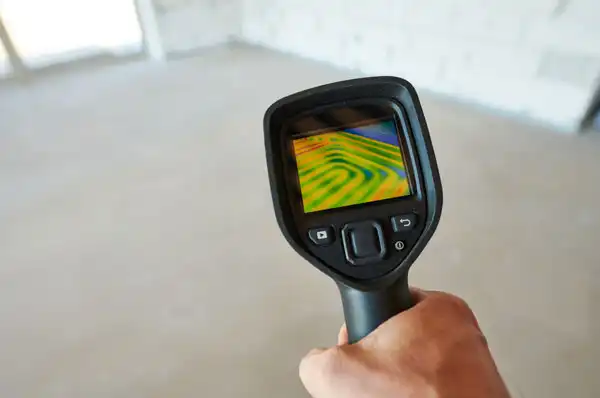
2. Thermal Imaging Cameras
Leaks cause temperature variations on the surface they contact, making thermal cameras indispensable for non-contact detection.
- Operation: These cameras measure the infrared energy (heat) emitted by objects and translate it into a visible spectrum (a thermal image).
- Purpose: They are highly effective for leaks in hot water lines or pipes running behind walls and ceilings. Even a small stream of cooler water within a wall cavity will show up as a noticeable “cold spot” on the camera’s screen.
- Benefit: Allows professionals to literally “see” temperature anomalies inside opaque building materials without damaging them.
3. Specialized Video Camera Inspection
When leaks are suspected in drain, sewer, or large irrigation lines, video cameras offer a direct visual confirmation.
- Operation: A flexible, fiber-optic cable with a high-resolution camera and powerful LED lights on the tip is inserted into the pipe through an access point.
- Purpose: Ideal for identifying root intrusion, deteriorated pipe sections, blockages, or separations in sewer lines and larger drains, which often lead to leaks.
- Benefit: Provides an unarguable visual record of the pipe’s internal condition and the precise nature of the leak or obstruction.
4. Tracer Gas Detection
For extremely small or challenging leaks, professionals may use an inert, non-toxic tracer gas.
- Operation: The water system is emptied, and a mixture of gases (often nitrogen and hydrogen, both safe and inert) is pumped into the pipes.
- Purpose: The gas escapes through the leak point and is detected on the surface using specialized gas-sniffing equipment.
- Benefit: Because gas particles are smaller than water molecules, they can escape even the smallest pinholes, providing ultimate precision.
By employing these advanced techniques, Advanced Home Services ensures that the disruptive process of repair is focused solely on the leak’s location, rather than on your entire home.
How Does the Leak Detection Process Work Step-by-Step?
When you call Advanced Home Services regarding a suspected leak in Idaho Falls, Fort Hall, or Rigby, our expert technicians follow a systematic, multi-step process. This methodical approach is designed to ensure accuracy, efficiency, and minimal impact on your home.
The $39 diagnostic process begins with a thorough intake and analysis:
Step 1: Initial Consultation and Symptom Assessment
- The technician reviews your concerns, asking detailed questions about the symptoms you’ve noticed.
- This includes questions about water bill spikes, the location of damp spots, and the time the symptoms appeared.
- This vital information helps narrow down the potential location and type of plumbing system involved (supply line, drain line, fixture).
Step 2: Inspection and Water Meter Check
- The technician performs a visual walk-through, checking areas prone to leaks, such as utility rooms, basements, and under sinks.
- The water meter test is the definitive starting point. All water usage is turned off, and the meter is monitored. If the dial moves, a non-visible leak is confirmed.
- Pressure testing may be conducted on isolated sections of pipe to determine which line is experiencing a loss of pressure.
Step 3: Deployment of Non-Invasive Technology
- Based on the initial assessment, the appropriate specialized tools are deployed.
- For suspected supply line issues, acoustic listening devices are used to scan floors and walls for the distinct sound of escaping water.
- If a hot water line is suspected, thermal imaging cameras are used to map temperature variations on walls and ceilings.
- Drain and sewer lines may require a video camera inspection to visually confirm pipe breaches or clogs causing a leak.
Step 4: Pinpointing the Leak Location
- The technician isolates the pipe section containing the leak and uses the diagnostic tools to hone in on the precise spot.
- The leak location is carefully marked on the wall, floor, or ground surface.
- This process is completed without unnecessary wall demolition or concrete removal.
Step 5: Comprehensive Report and Upfront Pricing
- The technician prepares a comprehensive report detailing the problem, including the evidence gathered from the diagnostic tools.
- They present you with personalized solutions for the necessary repairs, along with the upfront price.
- This ensures you can make an informed decision before any repair work begins, upholding our commitment to transparency and customer satisfaction.
This structured and technologically driven process ensures that the repair solution is always targeted and cost-effective, upholding the Advanced Home Services promise of quality craftsmanship in Southeast, ID.

What Are the Most Common and Riskiest Places for Leaks in Rigby, Idaho Falls, and Fort Hall Homes?
While leaks can occur anywhere in a plumbing system, certain areas of a home are inherently more prone to water escape and pose greater risk. For homeowners in the Rigby, Idaho Falls, and Fort Hall areas, understanding these vulnerable spots is the key to proactive maintenance. The foundation type and the severity of local winters dictate where the most serious leaks typically occur.
Here are the most common and riskiest locations:
1. Slab Leaks (Under Concrete Foundation)
- The Risk: These leaks are extremely difficult to detect and can undermine your home’s foundation. They often cause water to pool beneath the slab, leading to foundation cracks and shifting.
- The Cause: Plumbing lines running under the concrete are subject to friction from shifting soil, corrosion from chemicals in the ground, and excessive pressure.
- Detection: Requires specialized tools like acoustic sensors and pressure isolation testing.
2. Behind Walls and Ceilings
- The Risk: These are the most common sources of mold and mildew and can quickly degrade drywall, wood studs, and insulation. Since they are hidden, the damage often becomes extensive before being noticed.
- The Cause: Pinhole leaks in supply lines, failed connections at shower valves, or old drain line corrosion are typical culprits.
- Detection: Thermal imaging and careful listening are often used to find the telltale temperature or sound anomalies.
3. Underground Service Lines (Yard Leaks)
- The Risk: A leak in the main service line between the meter and your home wastes tremendous amounts of water and can compromise surrounding utilities.
- The Cause: Shifting ground, tree root intrusion, and freeze-thaw cycles (very common in Southeast ID) can crack or separate the main water line.
- Detection: Acoustic ground microphones and pressure testing are essential for pinpointing the leak location outside the home.
4. Water Heater and Appliance Connections
- The Risk: Leaks around water heaters can lead to basement flooding and potential electrical shorts. Appliance supply hoses (washing machine, dishwasher) are notorious for rupturing.
- The Cause: Corroded tanks, faulty temperature/pressure relief valves, and old, brittle rubber hoses are the primary reasons for failure.
- Detection: Often visually inspected, but thermal cameras can help find moisture trails from a heater leak spreading under flooring.
Advanced Home Services technicians are extensively trained to inspect these high-risk areas first. Our expertise in local Idaho home construction allows for efficient targeting of potential failure points.
What Are the Long-Term Consequences of Ignoring a Minor Water Leak?
It is tempting to delay calling a professional if you suspect only a minor drip, but procrastinating on leak detection is a financial and structural hazard. What starts as a small pinhole leak in a pipe inevitably escalates, leading to costly and sometimes irreversible consequences for your home and health.
The long-term effects of undetected water intrusion fall into four major categories:
1. Exponential Financial Costs
- Soaring Utility Bills: Even a slow leak can waste hundreds of gallons a day, translating directly into significantly higher monthly water bills. Over a year, this can amount to hundreds of dollars simply running down the drain.
- Excessive Repair Bills: Repairing the source of the leak is only the first step. You must also pay for the subsequent repairs to drywall, flooring, electrical wiring, and insulation that the water damaged. This cost far exceeds the original plumbing repair.
- Mold Remediation: Mold and mildew cleanup is expensive and specialized. Professional remediation may be required to safely remove pervasive mold colonies, adding a massive and unnecessary layer to your total cost.
2. Structural Deterioration
- Wood Rot: Continuous exposure to water causes wood framing, studs, and joists to rot and weaken. This can compromise the structural integrity of your walls and floors.
- Foundation Damage: Slab leaks allow water to wash away the soil supporting your concrete foundation. This movement can lead to settling, cracking, and expensive foundation repairs.
- Compromised Materials: Drywall softens and collapses when saturated, and metal components (like support brackets or nails) begin to rust and fail.
3. Health and Air Quality Hazards
- Mold Spores: Wet environments are breeding grounds for mold. Mold spores dispersed through the air can cause severe allergic reactions, asthma attacks, and respiratory issues, especially in sensitive individuals.
- Pest Infestation: Damp, rotting wood and hidden voids created by water damage attract pests like termites, carpenter ants, and rodents, creating secondary infestations.
4. Depressed Home Value
- Homes with documented water damage, structural issues, or signs of past mold are significantly less valuable and harder to sell. Failure to disclose or address these issues properly can lead to future legal complications.
In the end, the small expense of a professional diagnostic and early repair is always a better investment than enduring the immense, spiraling costs of secondary damage and remediation. Do not wait for a leak to become a flood, contact Advanced Home Services for service today.
Conclusion
A hidden leak can silently erode your most valuable investment, but professional leak detection offers a precise, non-invasive defense. For homeowners across Southeast Idaho, from Rigby to Idaho Falls and Fort Hall, relying on outdated methods is simply not an option in the face of our challenging climate. Understanding the subtle signs of a leak and knowing that advanced tools can pinpoint the problem without destroying your home is the first step toward effective home maintenance.
Advanced Home Services stands ready as your trusted partner, equipped with the technology and expertise to diagnose any hidden plumbing issue quickly and accurately. We provide the expertise your home needs, coupled with the upfront pricing and customer satisfaction guarantee you deserve. Don’t wait for a suspicious damp spot to become a costly catastrophe. Protect your property, preserve your health, and stop that wasted water today.
Call Advanced Home Services today for your home repair needs and schedule your $39 diagnostic!
Advanced Water Leak Detection: Frequently Asked Questions (FAQ)
How long does a professional leak detection service take?
The duration of a professional leak detection service varies based on the severity and location of the leak. A simple leak may be pinpointed within an hour. However, complex hidden leaks, such as those under a concrete slab or in a difficult-to-access area like a crawlspace common in Rigby homes, may take between two to four hours for a comprehensive diagnosis using multiple technologies like acoustics and thermal imaging. Our technicians work diligently to maintain accuracy while minimizing time spent on site.
Is professional leak detection service non-invasive, or will it damage my home?
Professional leak detection services, particularly those offered by Advanced Home Services, are designed to be entirely non-invasive. Our technicians utilize advanced equipment, including thermal cameras, acoustic sensors, and specialized video inspection tools. These technologies allow us to pinpoint the exact location of the leak within inches without needing to tear down walls, pull up flooring, or break concrete. Any necessary repair work performed after the diagnosis will be localized and surgical, not destructive.
How much does a leak detection diagnostic cost with Advanced Home Services in Southeast Idaho?
Advanced Home Services offers a professional Plumbing Repair Diagnostic for just $39. This diagnostic includes coming to your home, performing a full assessment to find the problem with your plumbing system, and providing you with a comprehensive report. Before any actual repair work begins, our technician will present you with all your options and an upfront price, ensuring you know the final cost before we start.
Why are leaks more common during the winter months in the Idaho Falls, Rigby, and Fort Hall areas?
Leaks become more common during the winter because of the severe cold temperatures experienced in Southeast Idaho. When temperatures drop below freezing, water inside pipes can turn to ice, causing the pressure between the ice blockage and the nearest closed faucet to increase dramatically. This excessive pressure is what causes the pipe to burst or crack, leading to significant, often hidden, leaks once the water thaws. Pipes running in unheated spaces or near external walls are most vulnerable.
Can a hidden leak cause problems beyond just high water bills?
Yes, a hidden leak causes numerous problems far more severe than just an increased water bill. The continuous introduction of moisture into your home’s structure leads to water damage to drywall, insulation, and electrical systems. More seriously, it fosters the rapid growth of mold and mildew, creating potential respiratory health hazards. If the leak is under your home, it can even cause soil erosion, which threatens the stability of your foundation.