

Walk past a return air vent on a sunny morning and shine a flashlight inside. If you see a gray fuzz coating the vanes, that is a small sample of what your air handler has been pulling through your ductwork for years. The question most Southeast Idaho homeowners ask next is the right one: how often should air ducts be cleaned, and is it actually worth the cost?
The honest answer is that the right interval depends on your home, your habits, and the climate around you. This guide walks through what the major industry sources recommend, the signs that point to a near-term cleaning, and the conditions in Southeast Idaho that can shorten the standard timeline.
What the EPA and NADCA Actually Recommend
Two organizations dominate this conversation, and they answer slightly different questions.
The National Air Duct Cleaners Association (NADCA), the trade group representing duct cleaning professionals, recommends professional cleaning every three to five years for most homes. NADCA frames this as preventive maintenance, similar to changing the oil in your car before something goes wrong.
The U.S. Environmental Protection Agency (EPA) takes a more reactive position. The EPA does not endorse a fixed schedule and instead recommends cleaning when there is clear evidence of a problem: visible mold growth inside the ducts or on other components of the HVAC system, an infestation of insects or rodents, or substantial visible debris being released from the supply registers.
Both positions are reasonable. NADCA looks at long-term system performance and the buildup of allergens. The EPA focuses on documented health benefits in the average home. For most Southeast Idaho homeowners, the practical answer sits between the two: schedule a professional inspection every three to five years and let that inspection drive the decision rather than the calendar.
How Long Has It Been Since the Last Cleaning?
If you cannot remember the last time your ducts were cleaned (or if you bought your home from someone who could not tell you), the safest assumption is that the cleaning is overdue. Ductwork in homes built before 2000 has often never been professionally cleaned at all.
A first cleaning in a long-occupied home almost always reveals more than the homeowner expected: pet hair from previous owners, construction debris that settled during the original build, and decades of fine dust that the filter did not capture. After that initial cleaning, the three to five year interval becomes a much better predictor.
Signs Your Air Ducts Need Cleaning Sooner
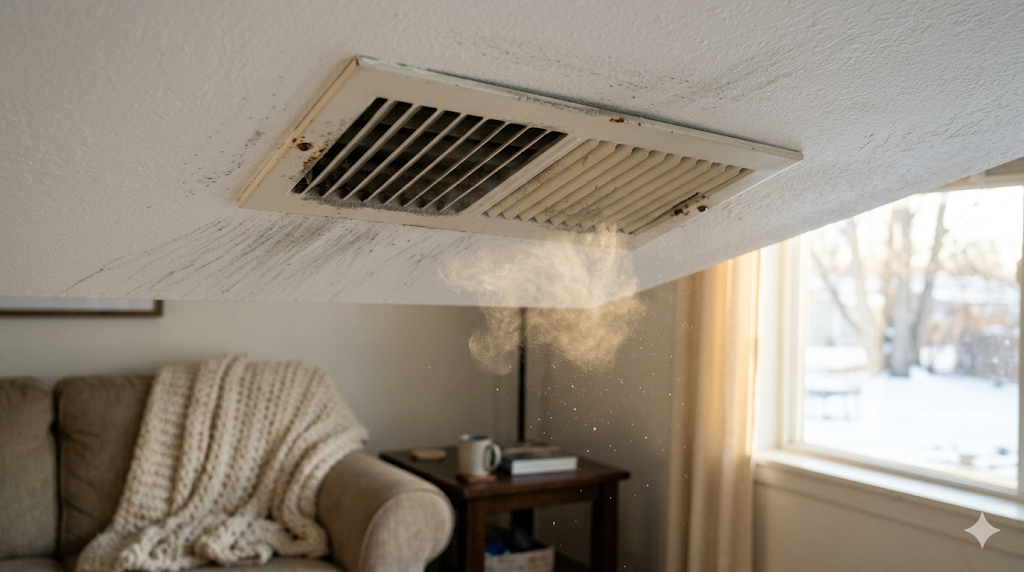
Schedules are useful, but specific symptoms matter more. Any of the following warrants an inspection regardless of when the last cleaning happened:
- Visible dust puffing out of the vents when the system kicks on
- A musty or stale smell that returns within a day of dusting
- Allergy or asthma symptoms that worsen when the heater or AC runs
- Uneven heating or cooling between rooms that cannot be explained by zoning or insulation
- Visible mold around register grilles, on the air handler, or inside the duct openings
- Pest activity in the attic, basement, or crawl space
- Dust that returns to surfaces within a day or two of cleaning
A single sign does not always mean cleaning is required, but two or more together is a strong indicator. If you see any visible mold growth, do not wait for the next scheduled service.
Conditions That Shorten the Standard Interval
The three to five year baseline assumes a typical household with no major contamination sources. Several common situations push the interval shorter:
| Condition | Recommended Interval |
|---|---|
| Average home, no pets or smokers | 3 to 5 years |
| One or more pets that shed | 2 to 3 years |
| Smokers in the home | 2 to 3 years |
| Allergy or asthma sufferers in the household | 2 to 3 years |
| Recent renovation or remodeling | Immediately after project completion |
| New home purchase | Within first 6 months if no records exist |
| Homes near agricultural fields, dirt roads, or construction | 2 to 3 years |
| Wildfire smoke exposure | Within 1 to 2 months of heavy smoke |
Southeast Idaho has a few of these triggers built in. Late summer wildfire smoke from regional fires routinely pushes air quality into unhealthy ranges across Idaho Falls, Pocatello, and the Snake River Plain. That smoke pulls fine particulate into return ducts and stays there. Homes near agricultural operations in Bonneville, Bingham, and Bannock counties also see higher dust loads from spring tillage and fall harvest.
What Professional Air Duct Cleaning Actually Involves
Knowing what the work looks like helps you separate honest providers from “$99 whole house special” operators that NADCA specifically warns against.
A proper residential duct cleaning takes three to five hours for a typical home and follows a predictable sequence. The technician seals the supply and return registers and connects a high-powered negative-pressure vacuum, often a truck-mounted unit, to the main trunk line. Compressed-air whips, agitator brushes, and air skipper tools then dislodge debris from the duct walls so the vacuum can capture it. The blower compartment, evaporator coil area, and return plenum get attention as well, since these are where the heaviest buildup usually lives.
Watch out for a few warning signs. Any provider that proposes spraying chemical biocides as a substitute for mechanical cleaning is doing something the EPA has explicitly warned against. Any provider whose price seems too good to compete with truck-mounted equipment costs is probably running a portable shop vacuum and skipping the trunk lines.
A real cleaning is not cheap. Expect a typical Southeast Idaho residential duct cleaning to fall somewhere in the $450 to $1,000 range depending on home size, system complexity, and condition.
Does Air Duct Cleaning Improve Your HVAC System?
Beyond air quality, regular cleaning has measurable effects on the equipment itself. A 1992 EPA study found that even 0.042 inches of dust accumulation on a heating coil can reduce efficiency by 21 percent. The math gets worse as buildup grows.
Clean ducts also extend the life of the blower motor, which has to work less hard against accumulated restriction. They reduce the load on your air filter so it lasts closer to its rated interval. And they pair well with regular HVAC service, which addresses problems on the equipment side that duct cleaning alone cannot fix. Our guide on how aging ductwork can cause furnace problems covers what to watch for as duct systems get older, separate from the cleaning question.
For homes already on a maintenance plan with annual heating maintenance and air conditioning maintenance, the technician can document duct condition during routine visits and flag when a full cleaning is justified.
What You Can Do Between Professional Cleanings
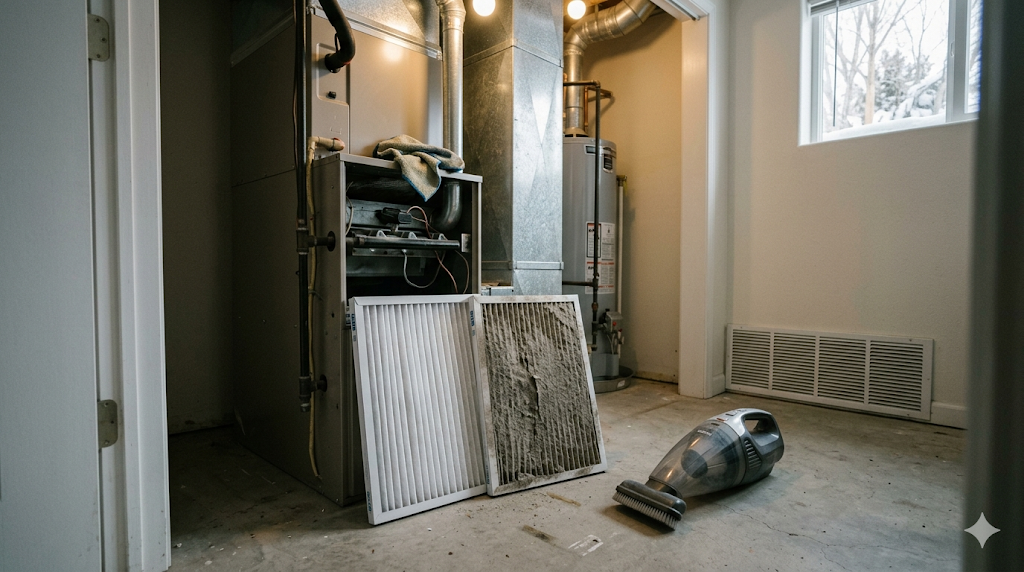
A few habits keep your ductwork in better shape and stretch the time between professional services:
- Change your furnace filter every one to three months, more often with pets or during wildfire smoke season
- Use a higher MERV-rated filter (8 to 13) if your system can handle it without restricting airflow
- Vacuum supply registers and return grilles monthly with a brush attachment
- Keep return grilles unblocked by furniture and rugs
- Wipe down the area around the air handler to limit debris pulled into the system
- Schedule annual HVAC tune-ups so blower components stay clean and balanced
Our post on why you should regularly change your furnace filter covers the timing in more detail.
When Duct Cleaning Is Not the Right Answer
A few situations call for something other than a standard cleaning. Asbestos-containing ductwork in older Southeast Idaho homes (particularly anything built before 1980) requires specialized abatement, not duct cleaning. Heavy mold contamination usually points to a moisture problem that has to be solved first or the mold returns within months. Severely deteriorated flexible ductwork is usually cheaper to replace than to clean.
A reputable provider will tell you when cleaning is not the right call. If a technician inspects your system and recommends repair or replacement instead of a cleaning, that is usually a sign of an honest assessment rather than a sales pitch.
Frequently Asked Questions
How often should I have my air ducts cleaned?
For most homes, every three to five years is the right interval. Households with pets, smokers, allergy sufferers, or recent renovations should clean every two to three years. After wildfire smoke exposure or any indoor mold event, schedule cleaning within one to two months.
How much does professional air duct cleaning cost?
A complete residential duct cleaning typically costs between $450 and $1,000. Pricing depends on home size, the number of supply and return vents, system condition, and whether your home has one HVAC system or multiple. Be cautious of pricing under $200, which usually signals an incomplete service.
Will air duct cleaning lower my energy bills?
It can, especially if buildup has reduced airflow or coated the heating and cooling coils. Even a thin layer of dust on a coil reduces efficiency significantly. The savings are usually modest but real, and they compound with proper filter changes and annual HVAC tune-ups.
Can I clean my own air ducts?
You can vacuum and wipe the visible portions of supply and return grilles yourself. Cleaning the actual duct interiors requires high-powered negative-pressure vacuum equipment that homeowners do not have access to. Attempting to clean ducts with a household shop vacuum will not remove embedded debris and can dislodge contaminants without capturing them.
How long does air duct cleaning take?
A standard residential cleaning takes three to five hours for a typical 1,500 to 2,500 square foot home. Larger homes, multiple HVAC systems, or heavily contaminated ductwork can extend the timeline.
Do I really need duct cleaning, or is it a scam?
Both are true. Routine duct cleaning is a legitimate service that benefits many homes, but the industry also has bad actors who push unnecessary work or use deceptive pricing. The honest middle ground is to base your decision on a documented inspection rather than a calendar date or a cold call from a discount cleaner.
Schedule Air Duct Cleaning in Southeast Idaho Now!
If your home is overdue for a cleaning, recovering from a major renovation, or showing the warning signs of contaminated ductwork, the team at Advanced Home Services can help. Call today to schedule a professional duct inspection or a full cleaning, and start with cleaner air in every room of your Southeast Idaho home.
About Advanced Home Services
Advanced Home Services has provided heating, cooling, plumbing, and indoor air quality services across Southeast Idaho for over 25 years. Our HVAC technicians work in homes throughout Idaho Falls, Rigby, Pocatello, Rexburg, Blackfoot, and surrounding communities, and every job is backed by our 100 percent satisfaction guarantee. If you are not sure whether your ducts need cleaning, our team can perform a professional indoor air quality assessment and give you an honest answer.