
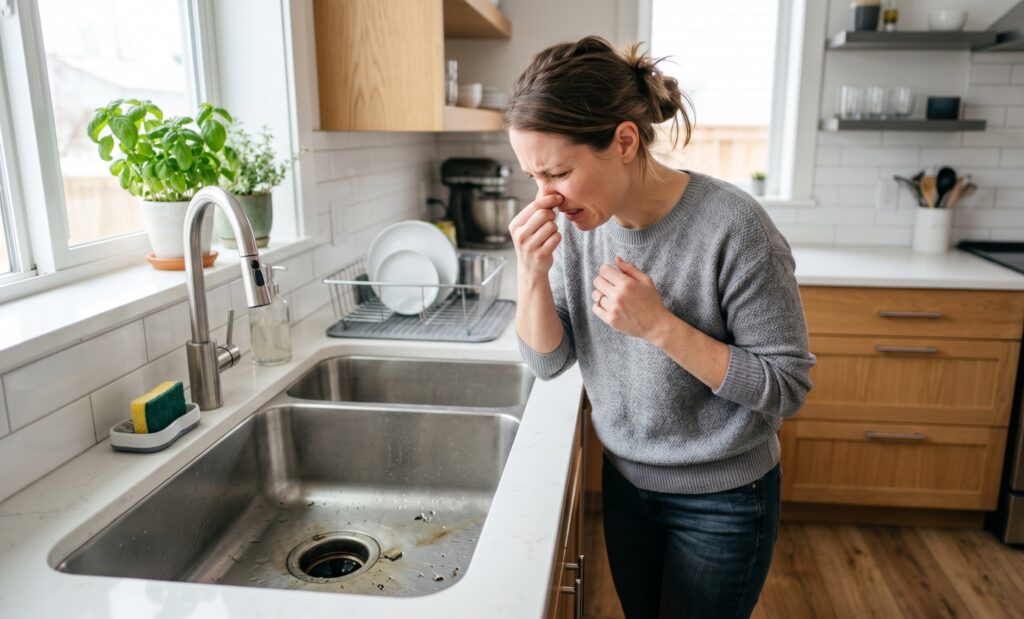
Is that rotten-egg stink hitting you when you walk past the bathroom? When a drain smells like sewer gas in your Southeast Idaho home, it usually points to a dried-out P-trap, a blocked vent stack, or something worse hiding in the line. We’re Advanced Home Services, and our licensed plumbers have been clearing stubborn drain and sewer issues across Idaho Falls, Pocatello, and Rexburg for years. We’ll pinpoint the source fast and fix it right the first time.
You walk into the bathroom and catch that unmistakable rotten-egg smell drifting up from a drain. Is it serious? Sometimes yes, sometimes no. Either way, a drain that smells like sewer in Southeast Idaho is not something to ignore.
Most smelly drains in Idaho Falls, Pocatello, Blackfoot, and Chubbuck homes trace back to four causes: a dried-out P-trap, biofilm gunk inside the pipe, a blocked vent stack, or a cracked sewer line. Some you can fix in five minutes. Others need a licensed plumber.
Smelly drain driving you out of the house? Call (208) 744-2675 to schedule service today.
Key Takeaways
- A drain that smells like sewer is most often caused by a dry P-trap, especially in guest bathrooms or floor drains.
- Blocked vent stacks and cracked sewer lines are the other top culprits we find in local homes.
- Pouring water down an unused drain fixes the problem in minutes if a dry trap is to blame.
- Persistent sewer odors point to a deeper issue that needs a licensed plumber and a camera inspection.
The Most Common Reason: Your P-Trap Has Dried Out
If your drain smells like sewer and nothing else seems wrong, a dry p-trap is the usual culprit. It’s the number one cause we find on service calls across Idaho Falls, Pocatello, and Blackfoot, especially in winter.
What a P-Trap Does and Why It Matters
A p-trap is the curved pipe under every sink, shower, and floor drain in your home. It holds a small pool of water that acts as a seal. That water blocks sewer gas from rising up the pipe and into your room.
When the water evaporates, the seal is gone. Sewer gas vents straight into your house. That’s the rotten-egg or sewage smell you’re picking up near the drain.
Here’s a quick way to confirm a p-trap dry out is the cause:
- Pour about a quart of water down the smelly drain.
- Run the tap for 30 seconds to refill the trap.
- Wait a few minutes. If the smell clears, you found it.
For drains you use less than once a month, pour a small amount of mineral oil in after refilling. It floats on top of the water and slows evaporation for weeks. If the smell comes back fast even after refilling, there’s likely buildup or biofilm coating the pipe walls, and our drain cleaning service can scrub it out.
Which Drains Lose Water First in Southeast Idaho Winters
Southeast Idaho winters are brutal on p-traps. We run forced-air heat for five or six months straight. Indoor humidity often drops under 25%. That dry air pulls water out of any trap that isn’t getting used regularly.
The drains we see go dry first:
- Guest bathroom sinks, tubs, and showers
- Basement floor drains
- Laundry room utility sinks
- Garage floor drains
- Spare-room or in-law-suite showers
It hits hardest when families travel for the holidays. Homes sit empty for a week or two, and folks walk back in January to a sewer gas smell in the house. Pour water down every drain you can find. That fixes most of these calls before we even need to roll a truck.
Biofilm and Organic Buildup: The Slow-Growing Cause

If your drain smells fine most of the time but reeks first thing in the morning or right after the dishwasher runs, you’re dealing with biofilm. It’s a slimy layer of hair, soap scum, grease, skin cells, and toothpaste coating the inside of your pipe walls. Bacteria feed on that gunk and release hydrogen sulfide gas. That’s the rotten-egg or raw-sewage smell hitting you when you lean over the sink.
This problem hits older Pocatello and Idaho Falls homes hardest. Houses built between the 1950s and 1980s often still have galvanized steel or cast-iron drain lines. Those rough interior walls grab buildup way more aggressively than modern PVC. If your shower drain smells like sewage and you live in an older neighborhood, biofilm is the prime suspect.
How Biofilm Forms in Kitchen and Bathroom Drains
Every time you shower, shave, or rinse dishes, organic material sticks to the pipe walls just above the water line. Over weeks and months it builds into a thick, dark sludge. Bathroom drains collect hair and soap. Kitchen drains collect grease and food particles. Both feed the same smelly bacteria.
The smell is worst in the morning because water has been sitting still in the trap all night, letting gas concentrate. Run the dishwasher and you push warm, food-laced water through the line, stirring up everything stuck to the walls.
When to Clean It Yourself vs. When to Call a Plumber
Try these DIY steps first:
- Pull the stopper and scrub it. You’ll be shocked by what’s under there.
- Use a drain snake or zip tool to pull out hair clogs.
- Flush with a kettle of boiling water once a week.
- Baking soda and vinegar can knock down odor short term, but it’s cosmetic.
Call us if the smell comes back after two DIY tries, if more than one drain stinks, or if you hear gurgling. Those signs point to buildup deeper in the line or a venting issue. For heavy biofilm in old galvanized lines, professional hydro jetting scours the pipe walls clean in a way no snake or store-bought cleaner can match.
Smell won’t quit after a good cleaning? Our drain cleaning team in Southeast Idaho can scope and jet the line. Call (208) 744-2675.
CTA Button: Schedule Service CTA Link: /contact-us/
Blocked or Damaged Vent Pipes: A Less Obvious Cause
Every drain in your house connects to a vent pipe that runs up through the roof. Think of a juice box. If you only poke one hole, the juice glugs out slowly. Poke a second hole and it flows smooth. Your plumbing works the same way. The vent stack is that second hole. It lets sewer gas escape above the roofline and keeps air pressure balanced so water flows down the drain instead of pulling backward.
How Plumbing Vents Keep Sewer Gas Out of Your Home
When the vent is blocked, two bad things happen. Sewer gas gets pushed back down through your drains instead of out the roof. And the suction from draining water pulls the water right out of your p-traps, leaving the seal broken. That’s why you get a sewer gas smell in house areas you’d never expect, like a guest bath nobody uses or a laundry sink.
Here’s a quick diagnostic. If you pour water down a smelly drain and the odor comes back within a day or two, the trap isn’t your problem. The vent is. A working trap holds water for weeks. Something is sucking it dry.
Signs Your Vent Stack Is Blocked or Broken
Watch for these symptoms in Idaho Falls, Pocatello, or Rexburg homes:
- Gurgling sounds from drains or toilets when another fixture drains
- Multiple slow drains across different rooms at the same time
- A smell that comes and goes instead of staying constant
- Toilet water that bubbles or drops on its own
- Sinks that drain fine alone but back up when the washer runs
In January and February, hard freezes are a known culprit around Chubbuck and Blackfoot. Warm moist air rises up the vent stack, hits the cold opening, and freezes into an ice plug. The whole stack gets capped off. We see this every winter.
Do not climb an icy roof to check. That’s a hospital trip waiting to happen. Common blockages also include bird nests, leaves, and cracked pipes inside the wall. Diagnosing a vent issue means smoke testing, camera work, or roof access with proper gear. Call our plumbing team and we’ll handle it safely.
When the Smell Means a Bigger Problem: Sewer Line Issues

Sometimes the smell isn’t coming from one fixture. It’s coming from your main sewer line. If you smell sewer gas in multiple rooms, see slow drains across the whole house, hear gurgling toilets, or notice wet spots in the yard, the problem is downstream. That’s not a DIY fix. That’s a licensed plumber and a camera.
Cracked or Collapsed Sewer Lines
Our high-desert freeze-thaw cycles are hard on buried pipe. Ground shifts. Old joints separate. Clay and cast-iron lines crack. We see this constantly in older parts of Pocatello, Idaho Falls, Blackfoot, and Chubbuck.
Tree roots make it worse. Cottonwoods and willows send roots straight toward any moisture they can find. A hairline crack becomes a root ball in a few seasons. Then waste backs up and sewer gas pushes up through your drains.
If your home was built before 1980, there’s a real chance you have Orangeburg pipe running to the street. It’s compressed paper fiber soaked in tar. It deforms, collapses, and fails. Once it goes, the only fix is replacement.
Watch for these red flags:
- Strong sewer gas smell in house, in more than one room
- Multiple slow drains at the same time
- Sewage backing up into a basement floor drain
- Soggy patches or unusually green grass in the yard
- Gurgling from toilets when you run the washer or shower
How a Camera Inspection Finds the Source Fast
A sewer camera inspection puts a waterproof camera on a flexible cable and feeds it through your line. We watch a live screen. We see cracks, root intrusion, bellies, collapses, and grease blockages exactly where they are. No guesswork. No tearing up the yard to look.
The camera also gives us a footage count, so we know how far down the line the damage sits. That tells us if we can spot-repair, hydro-jet, or if the line needs replacement. Catching it early is the whole game. A camera diagnostic now is a lot cheaper than excavating a yard after a full sewage backup.
If the smell keeps coming back, or you’re seeing slow drains, gurgling, or wet spots in the yard, don’t wait. Call us at (208) 744-2675 to schedule a drain cleaning or sewer camera diagnostic. We’ll tell you exactly what’s causing the smell and what it takes to fix it, before any work starts.
Frequently Asked Questions
Is Sewer Gas Coming From My Drain Dangerous to My Family?
Sewer gas is a mixture of hydrogen sulfide, ammonia, methane, and other compounds that can cause headaches, nausea, and dizziness at low concentrations. At very high concentrations, some of these gases are flammable or toxic, making prompt attention important. If you smell a strong sulfur odor throughout multiple rooms or feel physically ill, open windows and contact our emergency plumbing services right away rather than waiting to see if it clears on its own.
Can a Sewer Smell Come Back After I Fix the P-Trap?
Yes, a drain can dry out again if a fixture goes unused for another extended period, especially in a guest bathroom or seasonal home. Adding a few ounces of water every few weeks is enough to maintain the water seal. If the smell returns quickly even after regular use, the problem is likely something beyond the P-trap, such as a venting issue or biofilm buildup deeper in the line.
Does Homeowners Insurance Cover Sewer Line Repairs?
Standard homeowners insurance policies typically exclude sewer line damage caused by normal wear, root intrusion, or age. Coverage may apply if the damage results from a sudden, accidental event covered by your policy, such as a burst pipe from freezing temperatures. Advanced Home Services recommends reviewing your policy and asking about sewer line riders or separate service line protection plans, which are available through many insurers at a low monthly cost.
How Long Does a Professional Drain Cleaning Take?
A standard drain cleaning appointment at a single fixture typically takes between 30 and 60 minutes depending on the severity of the buildup and the length of the drain line. A whole-house drain cleaning or hydro-jetting service may take two to three hours. Advanced Home Services schedules same-day and next-day appointments throughout Southeast Idaho so homeowners are not left dealing with the odor longer than necessary.
Will Air Fresheners or Baking Soda Actually Eliminate the Smell?
Air fresheners only mask the odor and do nothing to address the underlying source, whether that is a dry trap, biofilm, or sewer gas intrusion. Baking soda poured into a drain can neutralize mild organic odors temporarily, but it will not dissolve significant biofilm or clear a blocked vent pipe. Relying on these products for more than a day or two while the smell persists can delay diagnosis of a problem that may be getting worse.
Can Tree Roots Reach My Sewer Line in a Residential Yard?
Tree roots are one of the most common causes of sewer line damage in Southeast Idaho, particularly in older neighborhoods with mature trees and clay or cast iron pipes. Roots seek out the moisture and nutrients inside sewer lines and can infiltrate through even hairline cracks, eventually causing blockages or collapse. Advanced Home Services uses camera inspections to confirm root intrusion and can recommend pipe lining or replacement based on the extent of the damage.
Should I Run Water in Unused Bathrooms Before Listing My Home for Sale?
Yes, running water in every sink, shower, and floor drain for about 30 seconds before showings is a simple step that refills P-traps and prevents sewer odors from greeting potential buyers. A sewer smell discovered during a home inspection can raise red flags and trigger costly negotiations even if the cause is as minor as a dry trap. If the smell persists after running water, scheduling a plumbing inspection with Advanced Home Services before listing can save you from surprises during escrow.
Ready to Get Started with Advanced Home Services?
Tired of the rotten-egg smell taking over your bathroom or kitchen? Advanced Home Services has been clearing dry traps, biofilm-clogged lines, and cracked sewer pipes across Idaho Falls, Pocatello, Rexburg, and the surrounding valleys for years. Call (208) 744-2675 or reach out online to schedule a same-day or next-day visit. Be sure to ask about our current drain service offers when you call.